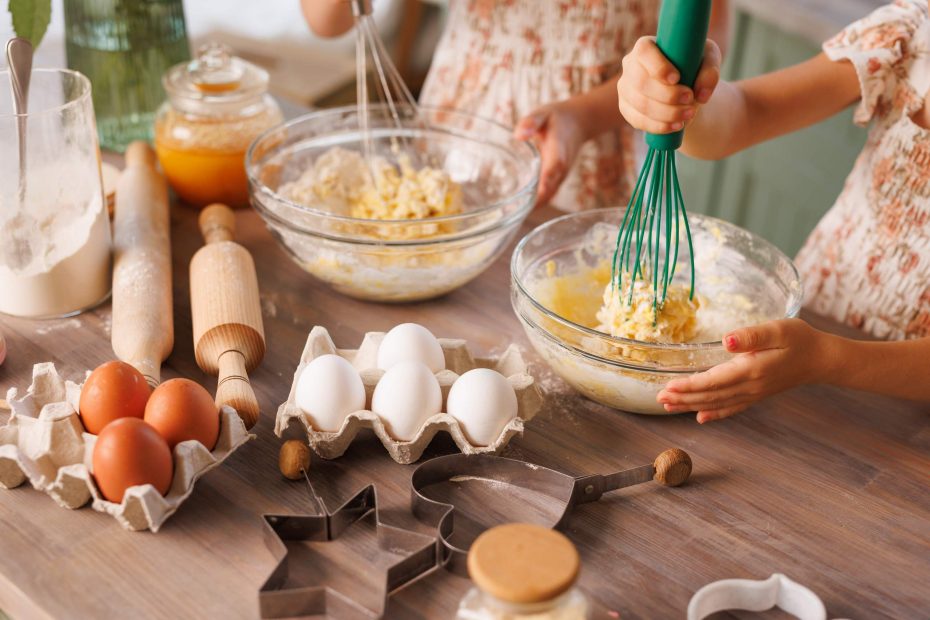
A good sponge cake is a great foundation for a lot of desserts. It makes a lovely base for cake rolls, layered cakes, and trifles. While a sponge cake is typically made with a few simple ingredients, there are some important factors to consider when making one.
How to Pick Your Ingredients
A traditional sponge cake only requires a few ingredients:
- Eggs
- Sugar
- Flour
- Sometimes a bit of fat or other ingredients, depending on the recipe
Since there are so few ingredients, it’s important that they are prepared and measured correctly.
It’s always a good idea to ensure that all your ingredients are measured before you start. Estimating how much you’re adding can result in a cake that is much denser than desired.
Preparation Before Mixing
Sponge cake batter can begin to lose its air if it sits too long before it’s baked.
Therefore, make sure that you have everything prepared and ready to go before you start mixing. Have your pan prepared, your oven preheated, your ingredients measured, and your utensils ready.
How to Prepare Your Pan
Depending on your recipe, you may want to line the bottom of your pan with baking paper. Some recipes also call for greasing the sides of the pan. For those that depend on the cake rising up the sides, don’t grease them unless you have to. Just follow whatever your recipe suggests.
Whipping the Eggs Correctly
Many sponge cakes rely mostly on whipped eggs for the cake’s structure and lightness.
Beat your eggs and sugar until it becomes noticeably paler, thicker, and fuller in volume. This could take several minutes, so don’t rush through it.
What Should the Eggs Feel Like?
When your eggs are ready, they should generally be pale and fluffy. Some recipes require the batter to leave a trail when you lift the whisk out. The point is to achieve a light, airy batter to ensure your cake will rise well when it’s in the oven.
How to Add Your Flour
Once your eggs are whipped, you’ll want to gently add the flour.
Add it slowly and fold the mixture instead of stirring vigorously. You don’t want to beat all the air out of the batter!
Be Gentle
Move your spatula through the batter and fold it up from the bottom. Stop as soon as your flour is combined. There’s no need to continue mixing once the batter looks even. ## Don’t Open the Oven Too Early
Once the cake goes in, resist the urge to keep the oven door open. A rapid change in temperature can disrupt the cake’s structure as it is setting. Instead, watch the baking time and check for doneness using the instructions from your recipe.
Check for Doneness
A well-baked sponge will have a light golden top and feel set to the touch. Depending on the recipe, you might be able to test for doneness with a toothpick in the center. If it comes out moist, allow more time in the oven.
Let the Cake Cool
Cooling is essential. Allow your sponge to cool as directed in the recipe before cutting or filling. Cutting it while it’s warm can cause the cake to fall apart. When building layers, a cool sponge is much easier to work with.
Common Mistakes and What Goes Wrong
The cake is dense
This happens if the eggs aren’t whipped enough or if the flour is overmixed.
The cake falls
This can occur because of a temperature change, underbaking, or a loss of structure while mixing.
The cake is dry
This happens from overbaking. Adjust baking times and temperatures for your recipe and pan size.
The texture isn’t even
This can be caused by uneven mixing, incorrect ingredient amounts, or uneven oven heat.
Experimenting and Learning
Don’t worry if your first sponge cake doesn’t look like a masterpiece. It is normal. Learn from each attempt. Observe how the batter changes while you’re mixing, and how the cake reacts in the oven. Every attempt will teach you more about your ingredients, tools, and methods.
Once you get the hang of making sponge cakes, you can experiment with different flavor combinations, fillings, fruits, creams, and decorations.
Wrapping Up
To make a great sponge cake, you need to get the ingredients right, whip the batter well, mix it gently, bake it carefully, and let it cool properly. Get those basics down, and you’ll have a foundation for many desserts.
Here at SweetHorizon, we think knowing how a recipe works will give you lots of options when you’re cooking. When you understand why a sponge cake works, you can start transforming that simple base into something special.